Nagarjuna Sagar Dam
Nagarjuna Sagar Dam
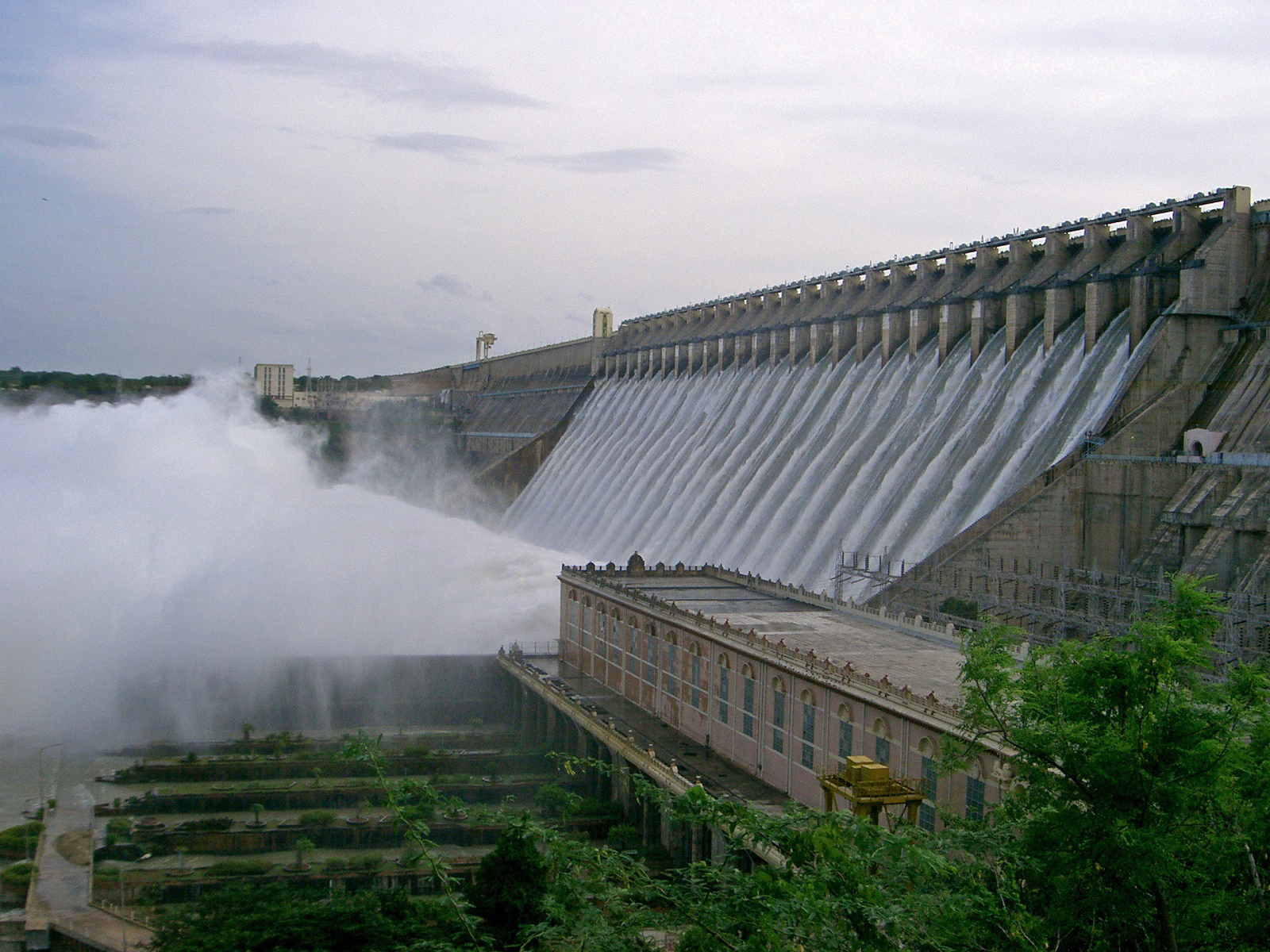
Nagarjuna Sagar Dam was built across the Krishna river at Nagarjuna Sagar which is in between Guntur District and Nalgonda District. The construction duration of the dam was between the years of 1955 and 1967. Nagarjuna Sagar was the earliest in the series of large infrastructure projects termed as "modern temples" initiated for achieving the Green Revolution in India. It is also one of the earliest multi-purpose irrigation and hydro-electric projects in India. The dam provides irrigation water to the Nalgonda, Suryapet, Krishna, Khammam, West Godavari, Guntur and Prakasam districts along with hydro electricity generation. Nagarjuna Sagar dam is designed and constructed to use all the water impounded in its reservoir of 408 TMC gross storage capacity which is the second biggest water reservoir in India. Project construction was officially inaugurated by Prime Minister Jawaharlal Nehru on 10 December 1955 and proceeded for the next twelve years. Raja Vasireddy Ramagopala Krishna Maheswara Prasad, popularly known as late Muktyala Raja was instrumental in the construction of the Nagarjuna Sagar Dam via active political lobbying, a donation of one hundred million British pounds and fifty five thousand acres of land. It was the tallest masonry dam in the world at that time. The reservoir water was released into the left and right bank canals by Prime Minister Indira Gandhi in 1967. Construction of the hydropower plant followed, with generation increasing between 1978 and 1985, as additional units came into service. In the year 2015, diamond jubilee celebrations of project's inauguration was celebrated remembering the prosperity the dam has ushered in the region. The construction of the dam submerged an ancient Buddhist settlement, Nagarjunakonda, which was the capital of the Ikshvaku dynasty in the 1st and 2nd centuries, the successors of the Satavahanas in the Eastern Deccan. Excavations here had yielded 30 Buddhist monasteries, as well as art works and inscriptions of great historical importance. In advance of the reservoir's flooding, monuments were dug up and relocated. Some were moved to Nagarjunakonda, now an island in the middle of the reservoir. Others were moved to the nearby mainland village called Anupu.
Address : Nagarjuna Sagar Dam,Guntur,Andhra Pradesh
Image Gallery